From pollution levels to the children breathing them.
More than 50 stakeholders from across Liverpool came together at Alder Hey for an explicitly transdisciplinary day focused on reducing air pollution and improving child respiratory health.
The University’s post-event coverage recorded council cabinet members, air quality leads, clinicians, industry, charities, academics and community-facing organisations in the room. That breadth mattered: the day could move from particulate matter to deprivation, from school exposure to vehicle cabins, and from policy to the air inside buildings.
Hosting the Roundtable at a children’s hospital made the consequences tangible. Poor air quality was not simply an environmental indicator. It was something clinicians were seeing in children and families.
Alder Hey put child health at the centre of the room.
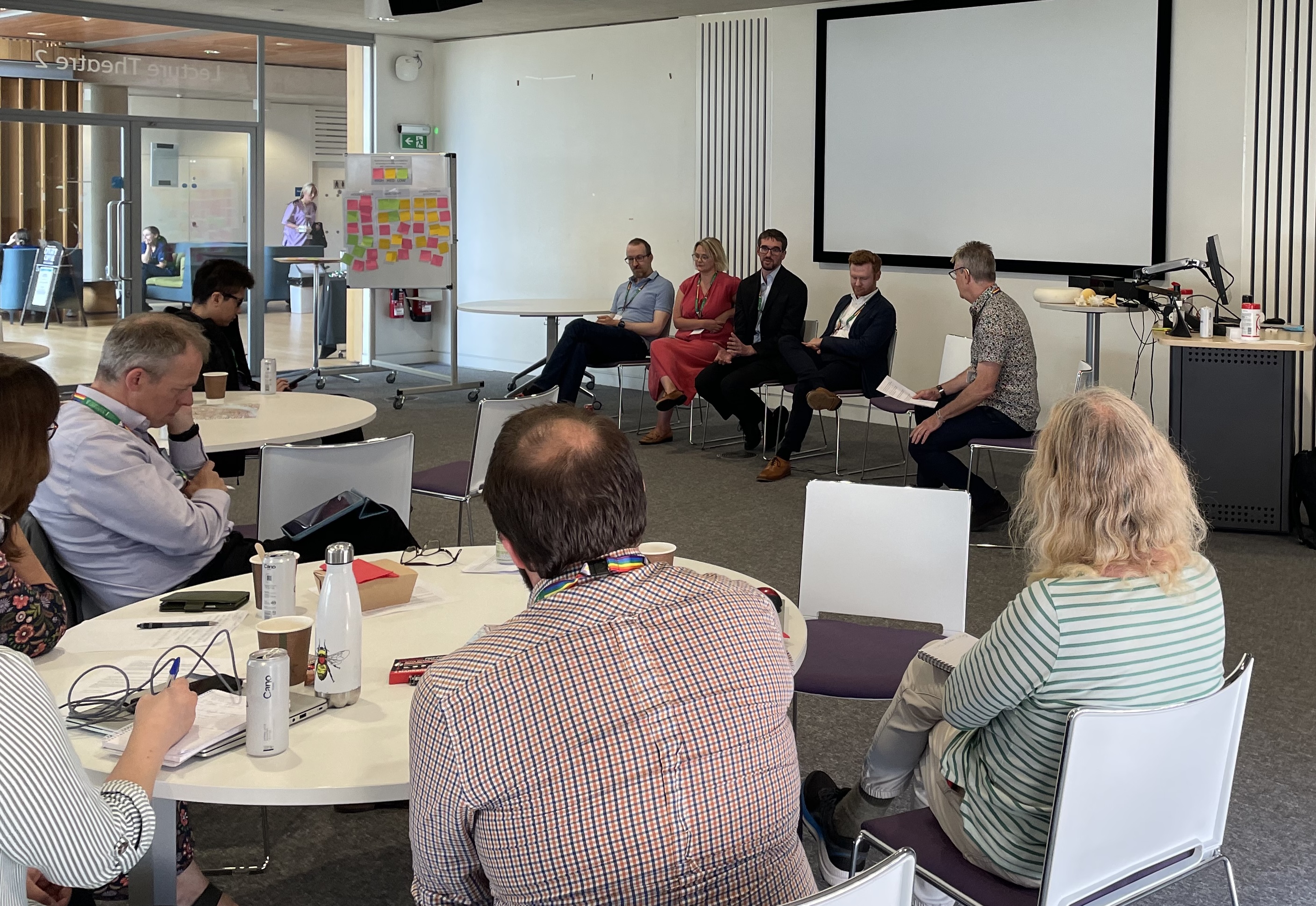
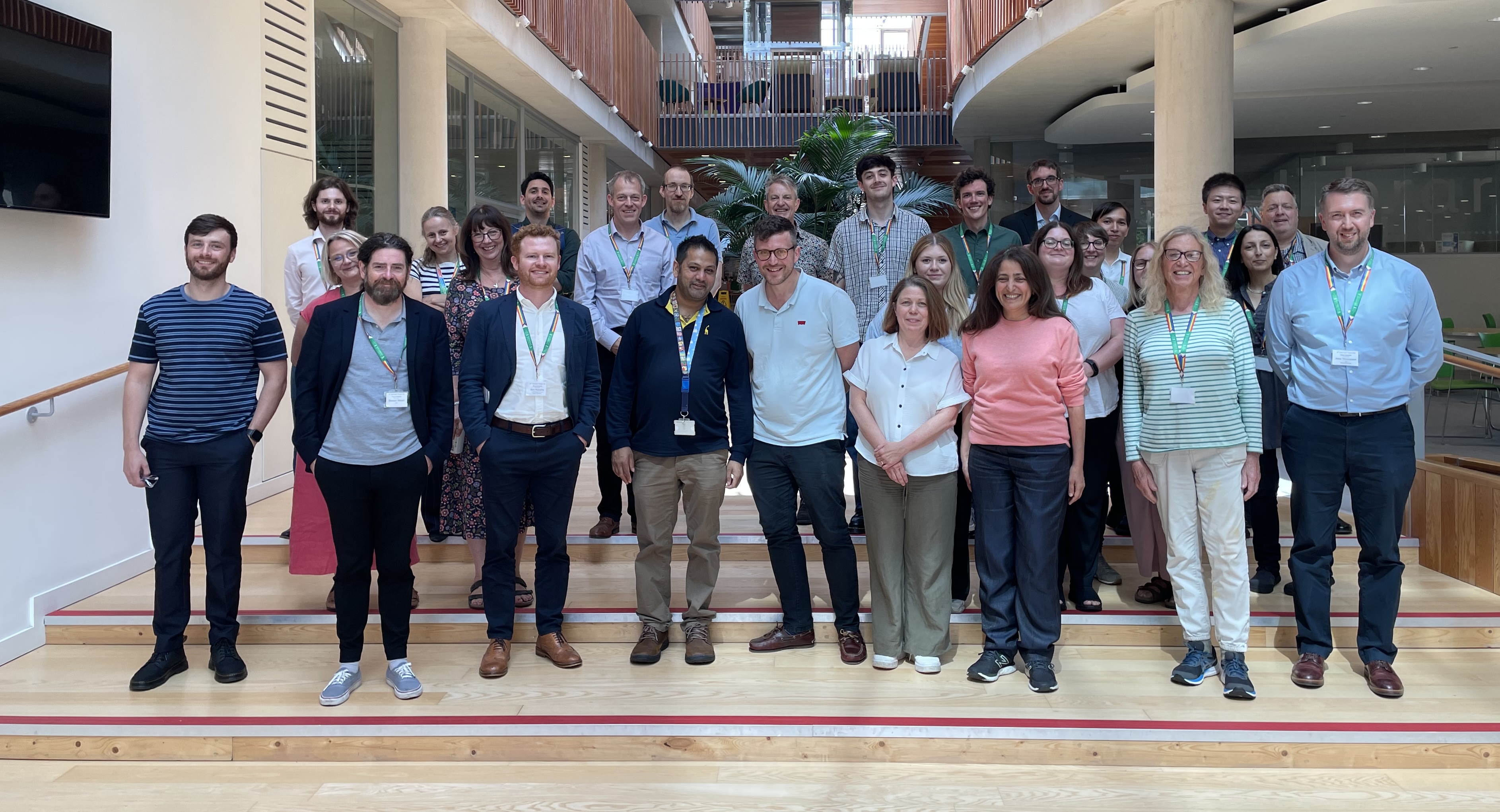
What would it mean to reduce exposure, not just measure pollution? The second Roundtable brought outdoor air, indoor environments, respiratory health, deprivation, transport and institutional responsibility into one discussion.
The evidence became much more personal.
Speaker topics are drawn from the University of Liverpool’s post-event press release.
Question Time, not conference theatre.
The afternoon deliberately changed format. Instead of another sequence of presentations, participants moved into facilitated, Question Time-style discussion.
University reporting records panel participation from Liverpool City Council air quality leads, Arup, Aeternum and indoor air quality researchers from Loughborough University. The wider attendance list included colleagues from Wirral, Knowsley and Halton councils, NHS organisations, housing, community groups and the Liverpool City Region Combined Authority.
An interactive exercise asked participants to rank the importance of indoor air quality, outdoor air quality and ventilation, then confront a harder question: who is most responsible for the air in homes of children with respiratory illness — householders, the NHS and government, or councils and housing authorities?
A city problem needs a city-sized mix of expertise.
Alder Hey and NHS
Clinicians, respiratory health specialists and NHS colleagues brought patient experience and health consequences into the centre of the discussion.
Four local authority areas
Liverpool, Wirral, Knowsley and Halton were represented alongside the Liverpool City Region Combined Authority.
Multiple universities
University of Liverpool, Loughborough University, Liverpool John Moores University and Liverpool School of Tropical Medicine were represented.
Housing + indoor air
Housing and indoor environment perspectives helped connect respiratory health to real buildings and everyday behaviour.
Industry + consultancy
Arup, Aeternum and other practitioners linked research questions to implementation, infrastructure and technology.
Local voices
Community and environmental groups made sure the debate did not become detached from the places and people affected.
The air quality conversation moved beyond the Roundtable.
The months after Roundtable II show the wider programme spreading into education and public engagement.
In October 2024, the University’s School of Environmental Sciences worked with PTI Education and St Edward’s School on a Clean Air CPD day. Teachers explored how real air quality research could enter Key Stage 3–5 Geography and Science, used low-cost monitors as practical classroom tools, and left with lesson plans to implement in their schools.
Then in January 2025, Clean Air Night took the subject out of meeting rooms altogether. Liverpool air quality data from 2024 was translated into a 365-note musical piece, with instruments representing different parts of the city. The performance took place in the Cunard arrivals hall while Liverpool waterfront landmarks were illuminated blue.
None of those activities replaced the Roundtable. They showed what the network around it was becoming capable of: research, medicine, local government, schools, culture and public engagement reinforcing one another.
Continue to 2025 →The 2024 story in public.
The research question had moved from pollution to exposure.
The network was generating city-scale data, but the most important questions were becoming human ones.
Work with Alder Hey had made child respiratory health and deprivation central. Indoor/outdoor monitoring had shown why an ambient concentration alone cannot describe what someone actually breathes. Research on mobility and meteorology had also made simple source stories harder to defend.
That is why the 2024 programme centred on children, schools, vehicles, indoor air, deprivation and responsibility. The event agenda was following the science rather than selecting themes in isolation.