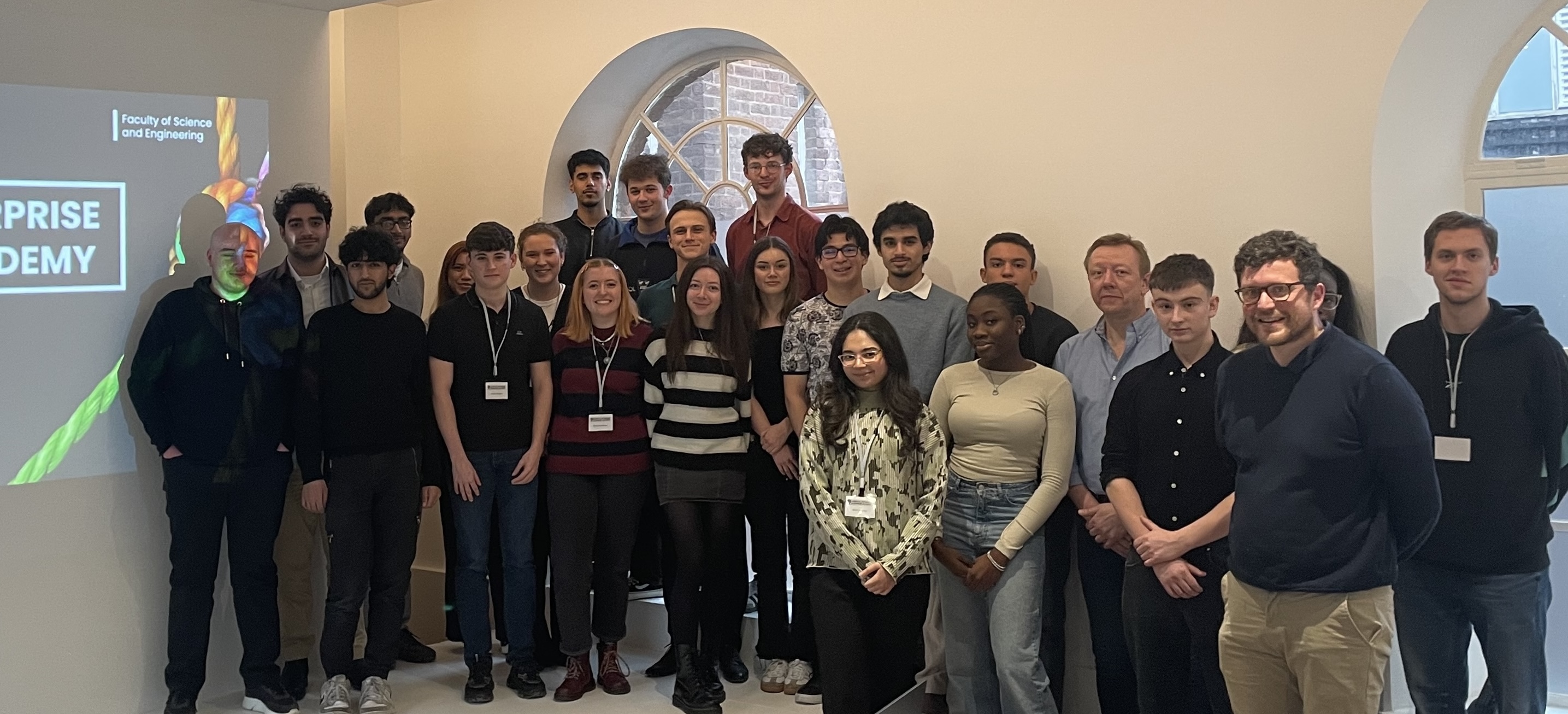
LELA cohort banner image

Programme and impact

The detail.

The fuller picture behind the programme, speakers, student response and internship route.

Programme timeline

How it built.

2025

Evening sessions establish the programme identity

The first year created the rhythm of LELA: cohort networking at the start of each session, an industry or research-led talk, and then structured time for students to ask deeper questions and practise professional conversation. That format gave students exposure to different sectors while building confidence in a supportive environment.

The speaker sequence also mattered. It showed that leadership does not look the same in every field and that strong careers are rarely linear. Students heard about entrepreneurship, logistics, planning, engineering progression and geographical data science, all framed through personal career stories rather than abstract advice.

Late 2025

Research and data broaden the picture

Professor Alex Singleton's contribution brought another dimension to the programme by showing how big data, geographical insight and external partnership-building create new forms of leadership. That reinforced one of the clearest themes in LELA: future leaders need specialist depth, but they also need to be able to translate knowledge across boundaries.

2026

The away weekend strengthens cohort identity

Programme materials describe the second-year away weekend at Central Tech as supported through the Sir Peter Rigby Fund. The format combined team building, confidence development and applied leadership training. It helped turn the cohort from a list of selected students into a learning community with shared momentum.

2026

Talks move into a more mature leadership ecosystem

With two cohorts now overlapping, the evening series gained another advantage: newer students could see what confidence and progression looked like in those who had already spent longer in the programme. The Sir Peter Rigby setting gave the events a more professional feel, while the speaker series became more clearly tied to employability, mentoring and next-step opportunity.

Speaker detail

Who came in.

2025

Jana Stella

NeuWave

Jana opened the first cohort's talk series with an entrepreneurial perspective rooted in technical expertise. Her story showed students how research thinking can develop into a commercial venture and why leadership in a start-up environment demands resilience, adaptability and the confidence to build something from scratch.

2025

Phil Nichols

Brambles / CHEP

Phil brought students into the complexity of global logistics and supply chains. His varied career path, including computing, teaching and business-building, gave students a useful lesson: leadership often grows through pivots, reinvention and the ability to keep learning in new contexts.

2025

Ian Ford

Pegasus Group

Ian's session connected leadership to place, planning and major regeneration challenges. His background in planning and infrastructure-related development gave students a concrete example of how leadership can shape the built environment, influence city change and require collaboration across multiple interests.

2025

Stephen Barker

MGF

As a University of Liverpool graduate who progressed from design engineering toward senior leadership, Stephen gave students a credible account of progression inside a major engineering business. His talk helped show how technical grounding, persistence and responsibility develop into leadership over time.

2025

Professor Alex Singleton

University of Liverpool

Alex broadened the leadership conversation beyond company case studies by bringing in geographical data science, big data and the long-term work of building industrial relationships. His contribution helped students see that influence and leadership can also emerge through research credibility and sustained partnership-building.

2026

Lydia Cross

Manufacturing Technology Centre

Lydia offered a recent-graduate perspective with real momentum behind it. Her story showed students that leadership does not wait for senior titles alone: it develops through judgement, communication, responsibility and the ability to contribute strongly within a design team.

2026

Peter Gezah

CHEP

Peter translated graduate recruitment and early-career progression into practical advice students could act on immediately. His session gave useful realism around application quality, employability behaviours and the importance of showing genuine thought and effort when presenting yourself to employers.

2026

Owaiz Khan

MGF

Owaiz linked professional development to chartership, engineering credibility and the wider balance of career and life. His session appears to have resonated because it combined professional seriousness with honesty, showing students that long-term success depends on both technical commitment and personal perspective.

2026

Mani Chandrasehar

BAE Systems

Mani gave students a view of graduate life inside a major organisation, including the pace of development and the value of intrapreneurship. That combination of technical work, responsibility and initiative helped students picture how leadership can begin early in their careers.
What the pattern shows

The common thread.

Across the two years, the strongest common thread is not a single discipline. It is adaptability. The leaders students heard from had pivoted between sectors, translated specialist knowledge into wider value, and learned how to collaborate across different worlds. That is exactly the kind of behaviour the University should want to encourage in a modern leadership academy.

It also supports the University of Liverpool's wider strategic emphasis on partnership, digital enablement and long-term impact. LELA is not simply training students to be confident speakers. It is helping them become more fluent in interdisciplinary working and more aware of how value is created in real organisations.

In one line

LELA takes the University's big goals and makes them visible at student level: stronger education, stronger partnerships, stronger confidence in digital and industry-facing futures, and stronger regional impact through talent development.

Opportunity pipeline

Where it lands.

The programme materials describe a new internship opportunity connected to the Digital Innovation Facility, with LELA students invited into a networking lunch, role exploration and a competitive selection process for paid summer roles.

That is significant on its own, but it becomes far more compelling when framed in the wider institutional context. Public VEC materials describe the centre as a University of Liverpool-created engine for digital adoption and applied innovation, bridging the gap between research and industry challenge. Its published history highlights digital skills development, multidisciplinary expertise, strong partners and a direct relationship with the Digital Innovation Facility.

Why it matters

  • Paid internships make the leadership offer tangible.
  • VEC and DIF give the pathway institutional credibility.
  • Projects connected to external organisations show clear economic and regional value.
  • Students can see a visible route from academy participation to professional contribution.

Student voice

What landed.

I have enjoyed the experience so far and I look forward to attending future events.

Feel much more confident after the first two sessions.

The LELA course has been excellent so far, we have learned many useful things, it focuses on important points about how to be a leader, this is a key requirement in the job market.

I am excited to be paired up with a mentor and hope to make the most out of this opportunity.